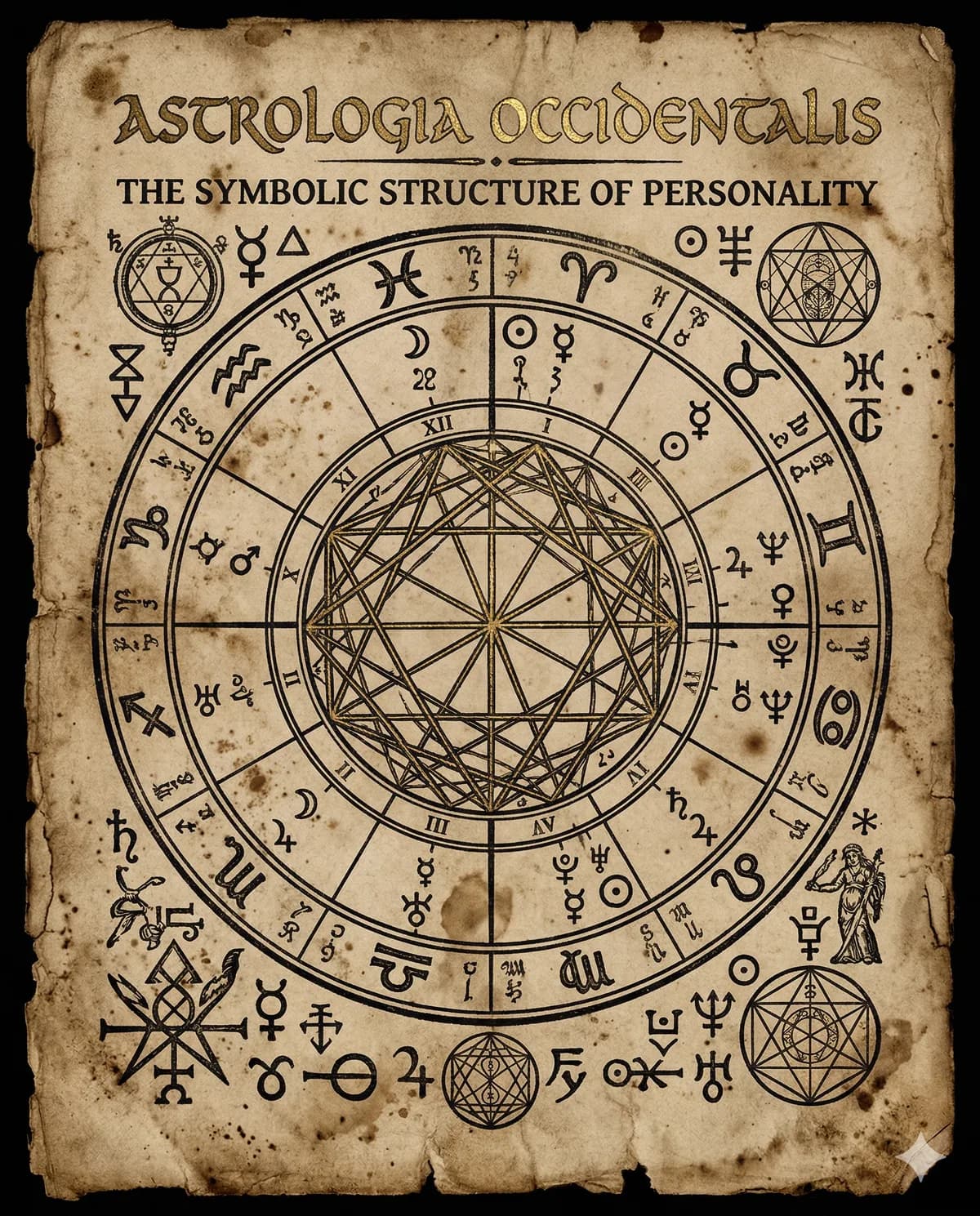
Classical Western Astrology
Western astrology is one of the oldest systems for the symbolic interpretation of human beings and events.
Roots. Its roots reach back to the Babylonian tradition and Hellenistic philosophy. As early as the second century CE, Claudius Ptolemy codified the accumulated knowledge in the "Tetrabiblos", laying the foundation upon which medieval, Renaissance, and modern schools would grow.
The Natal Chart — Foundation of the Method
The method is built upon the natal chart — a snapshot of the sky at the time and place of birth.
- 12 zodiac signs — define the quality of energy
- 10 planets (from Sun to Pluto) — point to archetypal forces and life domains
- 12 houses — divide the chart into zones of experience, from self-expression to career and spiritual seeking
- Aspects — angular relationships between planets, revealing tensions and resources
Life Dynamics
Life dynamics are described through:
- Transits — the current movement of planets across the chart
- Progressions — a symbolic unfolding of the chart through time
- Directions — directed movements
Three scales at once. This allows the system to operate simultaneously at three scales: a specific moment, life phases, and the overall trajectory.
Degree of Determinism
From fate to language. The degree of determinism varies considerably between schools — from the traditional ("fate is written in the stars") to the psychological (astrology as a language for discussing tendencies and potentials).
Place in Errarium
Strength and limitation. Within Errarium, Western astrology is treated as a system of symbolic correspondences rather than an empirically verified law of nature. Its strength lies in the richness of its archetypal language and its capacity to hold a holistic picture of personality and biography. Its limitation is a critical dependence on the exact time of birth and on the interpretive skill of the astrologer.
Method Info
Cat.  Astrological
Cult. Western / Hellenistic
D D1
C C2+C3
T T0+T2+T3
F F1, F2, F3, F4